The Shen's resting place on the chest. Shencang (KI-25) is where the Kidney channel reaches up to the heart — quieting anxiety, opening the chest and supporting the breath when fear, grief or exhaustion have locked the body tight.
Name & story
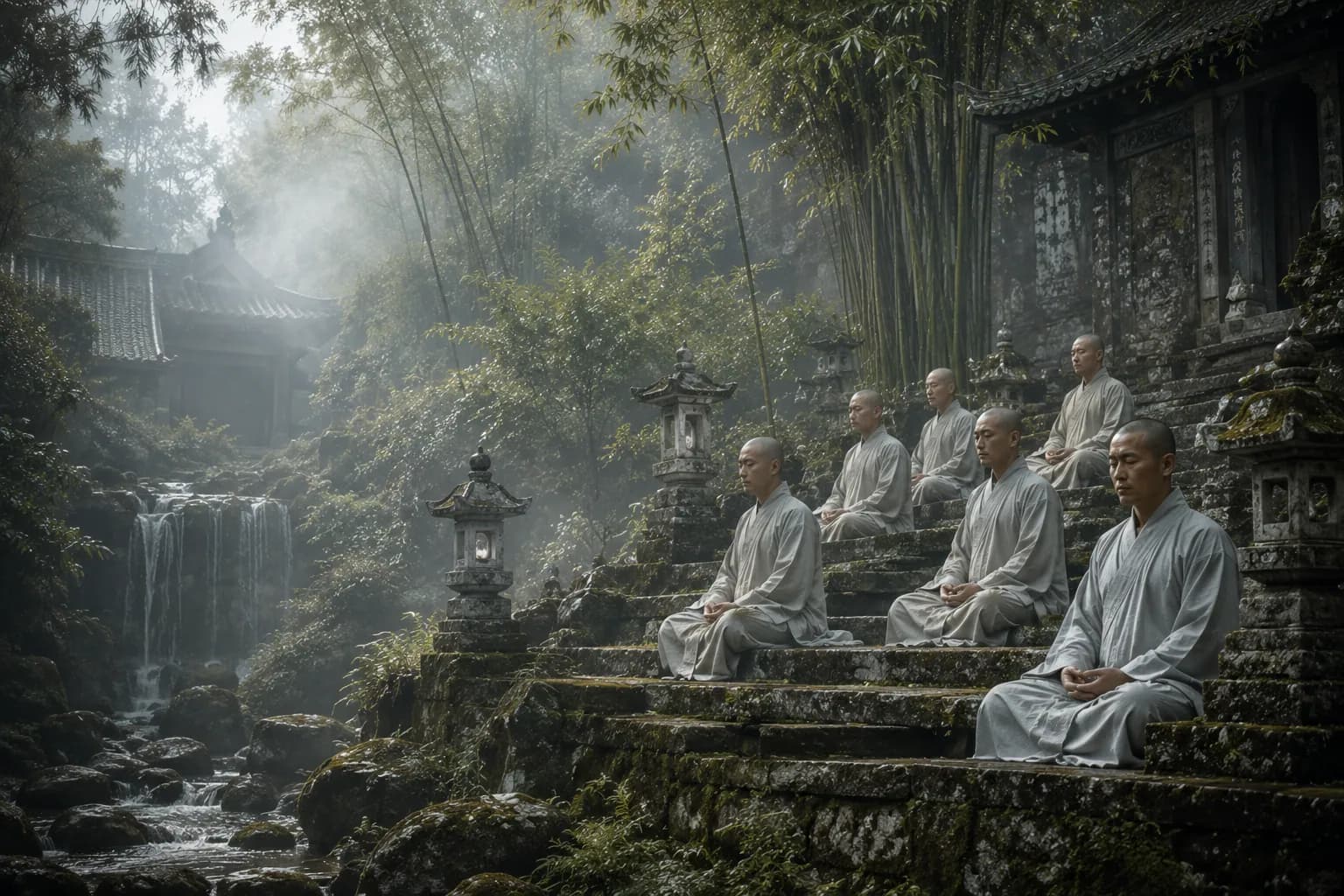
The name 神藏 Shencang means "Spirit Storehouse" or "Hidden Spirit" — a place where the Shen is kept safe, tucked away and sheltered. Imagine a small inner chamber in the chest, a sanctuary where the spirit retreats when the world becomes too loud or too frightening. The Kidney channel, which carries the deepest reserves of the body, climbs all the way up to the chest at this point, as if bringing the root energy of the Kidneys up to nourish and shelter the heart's spirit. That image — a quiet hiding place for the Shen — is exactly what the name offers.
Point family & character
KI-25 belongs to the Kidney Meridian (KI). It sits on the upper chest portion of the channel, where the Kidney meridian runs close to the heart and lung region. It is part of the group of Kidney chest points that link the deep root of the Kidneys with the upper body — an important bridge between the Water element below and the Heart and Lung above.
Five-element dynamics
The Kidney channel belongs to the Water element — the deepest, most fundamental energy in the body, the root of all Yin and Yang. When Water is strong, it rises gently to nourish the Heart (Fire) and keep its flame steady and warm. When Water is depleted or when fear disturbs it, that nourishing connection breaks, the chest tightens, the breath shortens, and the Shen grows restless. Shencang sits at exactly the point where the Kidney channel passes through the chest, making it a natural meeting place of Water and the Heart — where the deep reserves of the body speak directly to the spirit.
Location
On the chest, in the second intercostal space, 2 Cun lateral to the midline (2 Cun from the centre of the sternum). It sits just below KI-26 and above KI-24, in a gentle depression along the inner chest.
Anatomy & fascia
The point lies on the chest, over the costal cartilage, in the region of the pectoralis major muscle.
Needling
The needle is inserted obliquely or transversely along the skin, directed away from the underlying lung tissue. The needle should not be angled deeply inward toward the chest cavity.
Moxa, cupping & Tui Na
Gentle Moxa is sometimes applied here to warm the chest and support the Lung and Kidney Yang when there is Cold, weakness or chronic breathlessness. Light acupressure and breathing exercises can complement treatment, especially for anxiety and chest tightness.
Functions
Descends rebellious Lung Qi and relieves coughing and breathlessness. Opens and relaxes the chest. Calms the Shen and eases anxiety. Supports the Kidney's role in grasping the Qi downward. Harmonises the communication between the Kidney (Water) and the Heart (Fire).
Indications
Coughing, breathlessness, asthma and wheezing — especially when the Kidney fails to grasp and anchor the breath downward. Chest tightness, congestion and pain in the chest. Vomiting, nausea and loss of appetite when the upper body is affected by rebellious Qi.
Mind & spirit (Shen)
The name says it plainly — this point is a home for the spirit. When fear, prolonged grief or deep exhaustion have unsettled the Shen, the chest closes in, breathing becomes shallow and the heart feels as though it cannot rest. Shencang offers a kind of inner shelter: it draws on the Kidney's deep reserves to nourish the heart, quietens the restless spirit and helps a person feel grounded and safe again. It is a point worth remembering when anxiety sits precisely in the chest — that tight, breathless, almost trapped feeling — and the person needs not just calming but a sense of returning home to themselves.
Point combinations
With Ren-17 (Shanzhong) — to open the chest, descend rebellious Qi and relieve breathlessness and tightness. With KI-1 (Yongquan) or KI-3 (Taixi) — to reinforce the Kidney root and support the downward grasping of Qi. With BL-15 (Xinshu) — to calm the Shen and nourish the Heart when anxiety and palpitations accompany chest symptoms.
Clinical spotlight
What makes Shencang quietly remarkable is its position: it is the place where the Kidney channel — the deepest channel in the body, the carrier of Jing and the root of all life — arrives at the chest and stands directly beside the heart. Most Kidney points work at the feet, legs or lower abdomen; this one reaches all the way to the upper body. That makes it especially useful in patterns where the Kidney is failing to support the Lung (the breathless, exhausted patient who cannot draw a full breath) or where the Kidney Water is not rising to cool and nourish the Heart Fire (the anxious, wakeful, frightened patient whose unease lives in the chest). Its name alone — Spirit Storehouse — signals that this point was always understood to be about more than the body.
The golden tip
To find Shencang, place your fingers on the breastbone and move about two finger-widths outward, to the second rib space down from the collarbone. A gentle circular massage here — slow, calm breathing while pressing softly — can help ease a tight chest, nervous breathing or a racing, anxious heart. Combining the touch with slow, deliberate exhales tends to deepen the effect.
For education only — not medical advice. Consult a qualified practitioner.