BeginnerFree
Introduction to Chinese Medicine
The doorway to the whole tradition: what Chinese medicine is, where it came from, how it thinks, and the map of everything you will learn.
Learn
The doorway to the whole tradition: what Chinese medicine is, where it came from, how it thinks, and the map of everything you will learn.
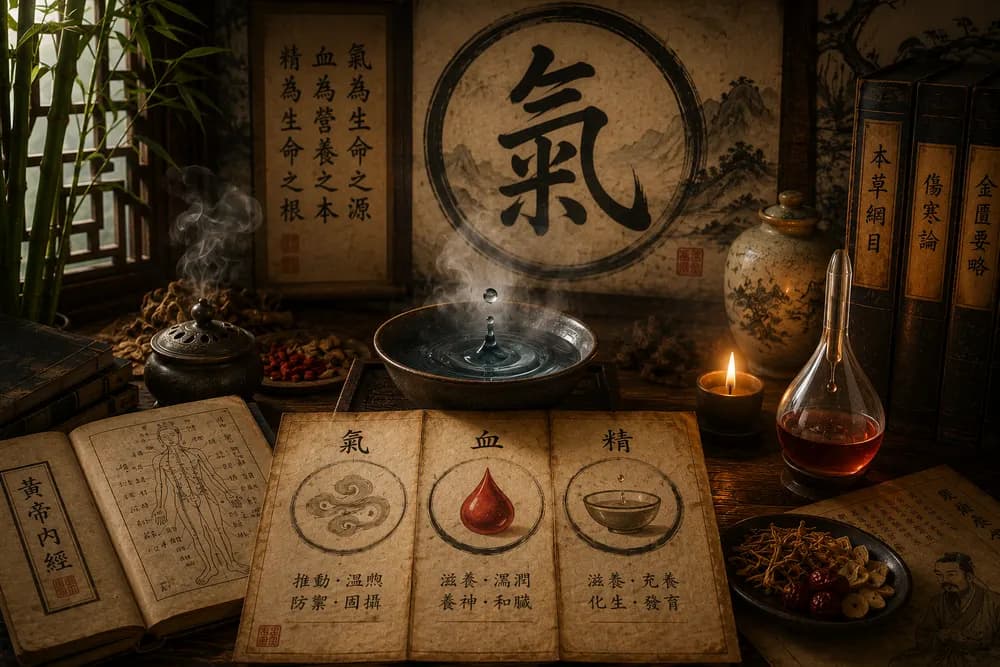
Qi, Blood, Essence (Jing), Spirit (Shen) and Body Fluids — the living material the body is made of, and what it means for each to be in excess or deficiency.
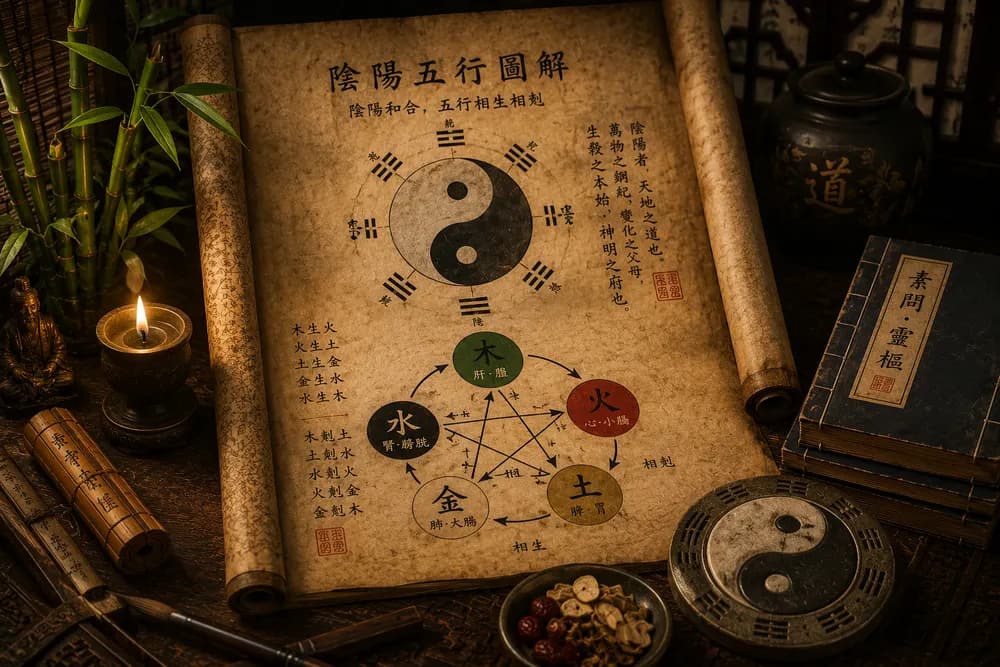
The two great models that order the whole of Chinese medicine — the logic of balance (Yin-Yang) and the logic of relationship and cycle (the Five Elements).
The art of nurturing life — living in harmony with nature, mind and food to prevent illness and build lasting vitality.
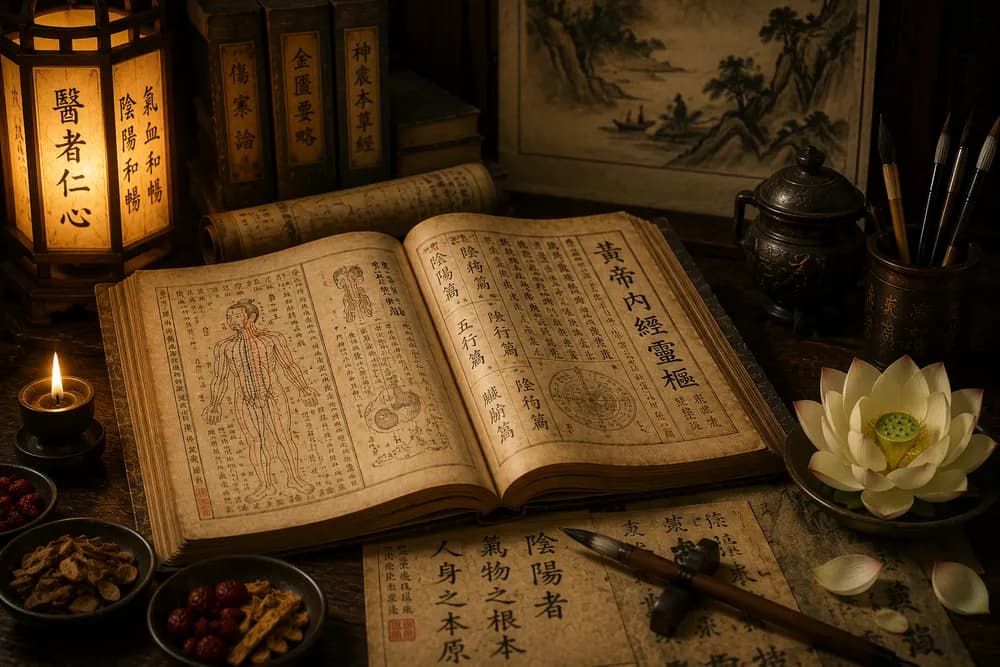
How the substances, organs and channels work together as one living, functioning whole — the great processes of physiology.
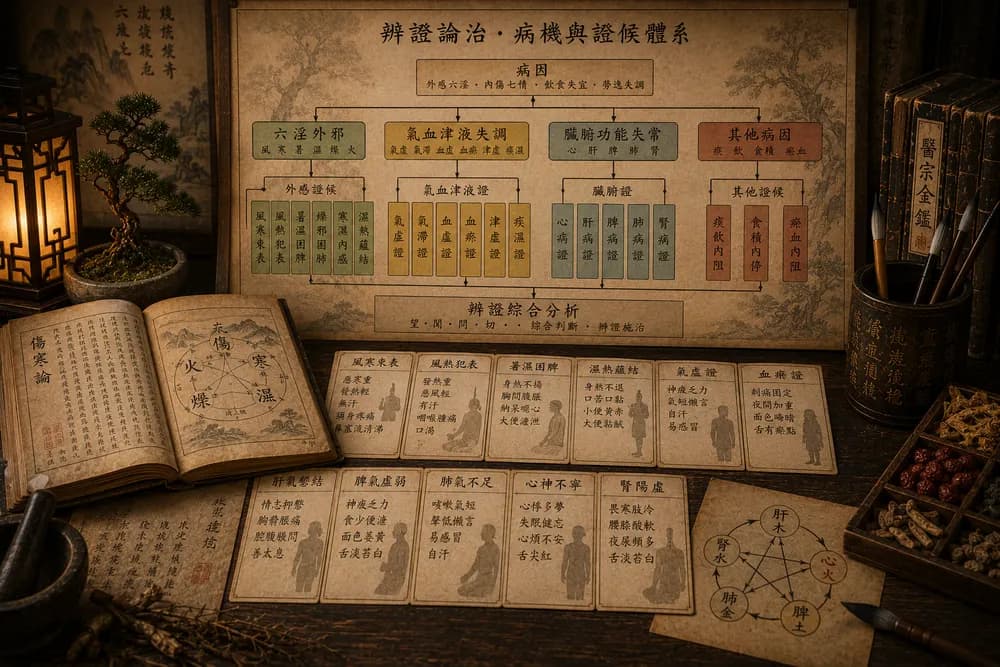
The heart of Chinese diagnosis — how the gathered signs are assembled into a pattern that guides treatment.
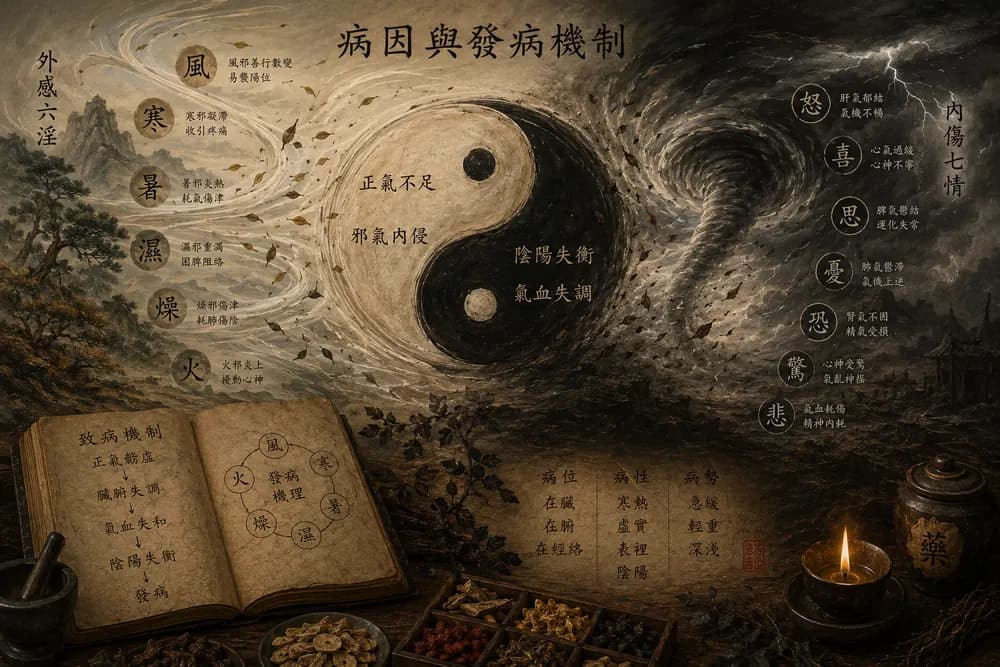
Why illness begins — the external, internal and other factors that disturb the balance of Qi.
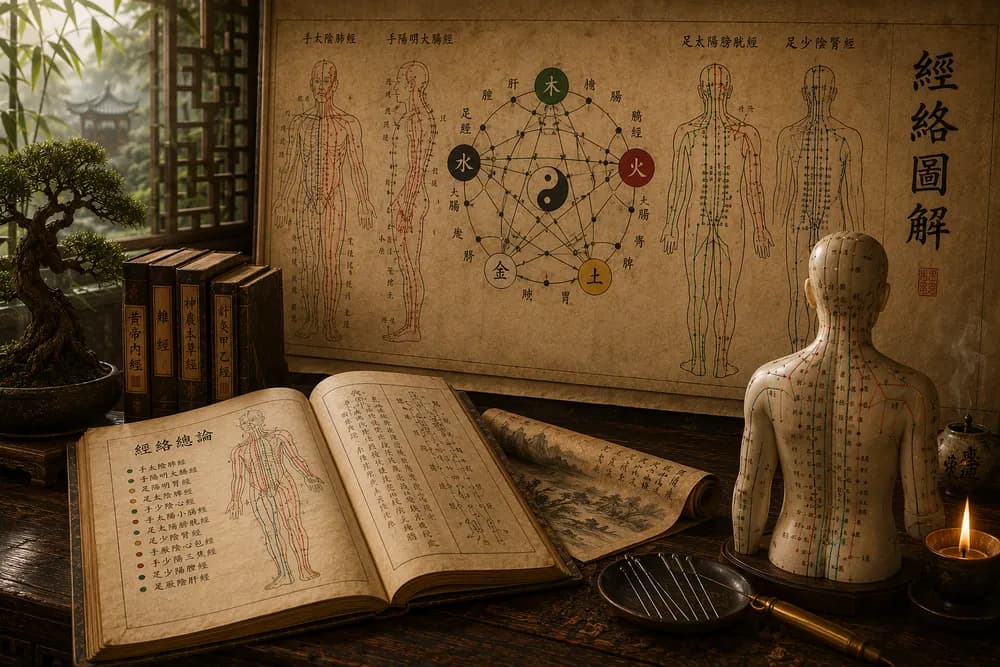
The network of meridians that carries Qi through the body, and the points where it can be reached and adjusted.
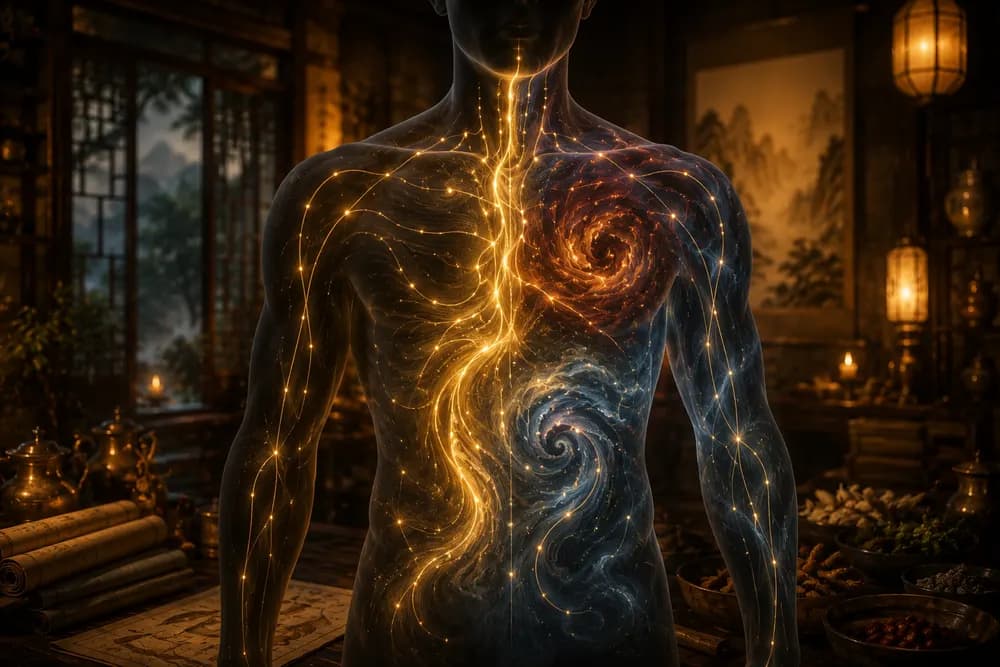
How an initial disturbance unfolds into the patterns of illness — the dynamics of excess and deficiency, imbalance and movement.
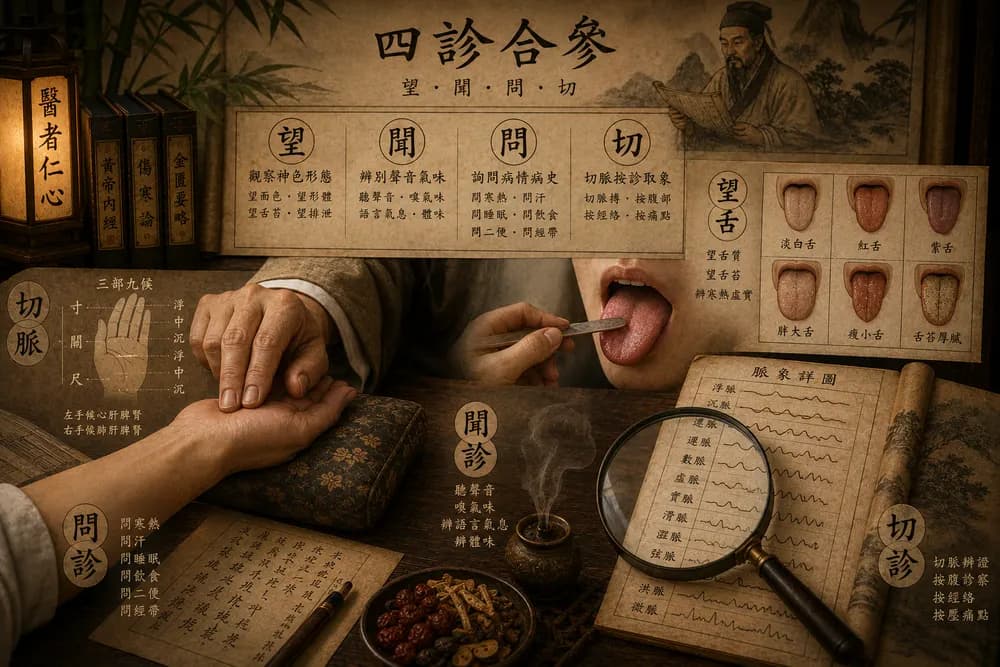
How the physician gathers the signs — looking, listening and smelling, asking, and touching — to build the pattern.
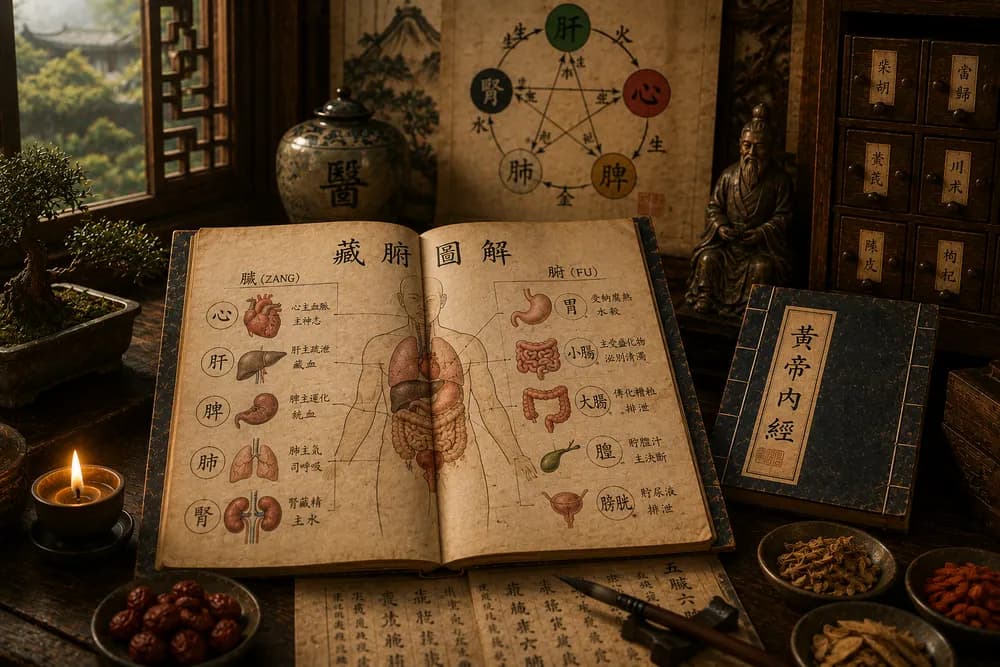
The functional organ networks at the heart of Chinese physiology — what each organ governs, and how they work together.
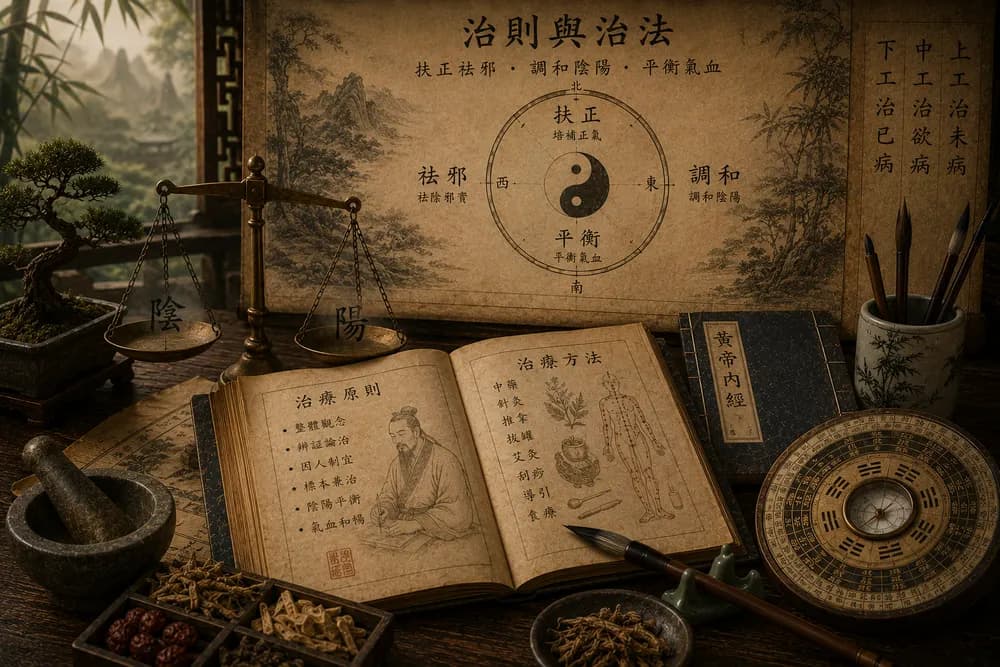
How the treatment principle becomes action — the strategies of treatment and the methods that carry them out.
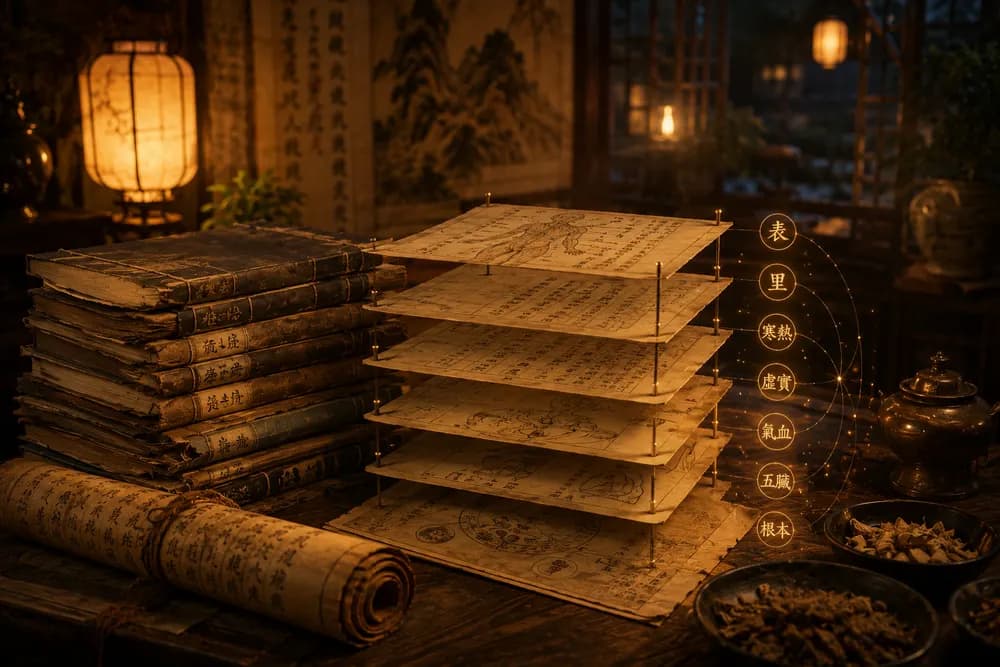
The staging systems for acute, externally-contracted disease — the Six Channels, the Four Levels, and the San Jiao — that track a pathogen from surface to depth.
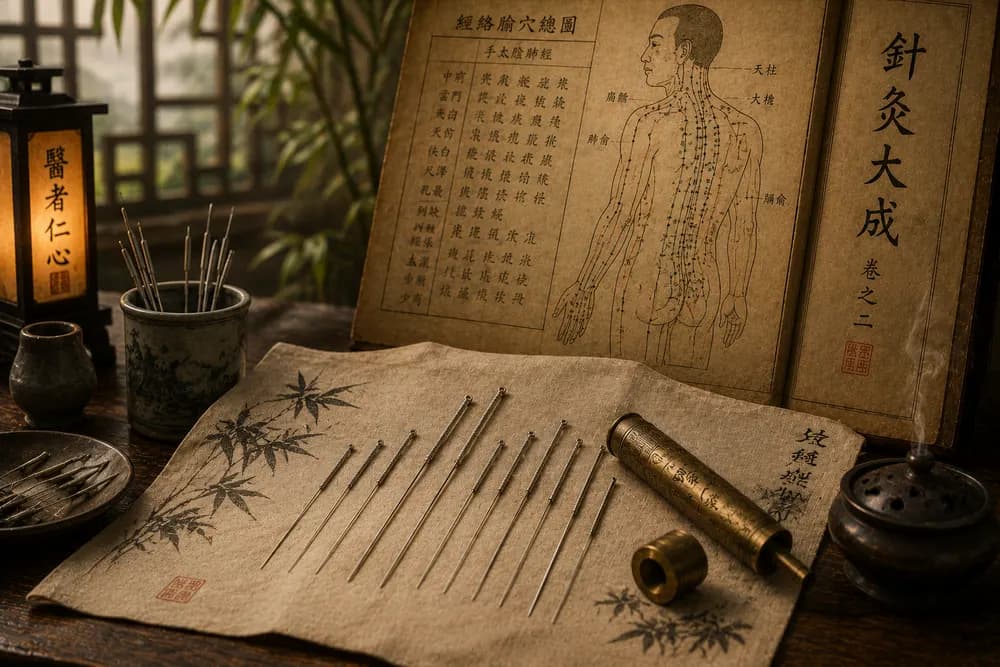
The art of the needle — how points work, the essential points of every channel, and the hands-on techniques of safe, effective needling.
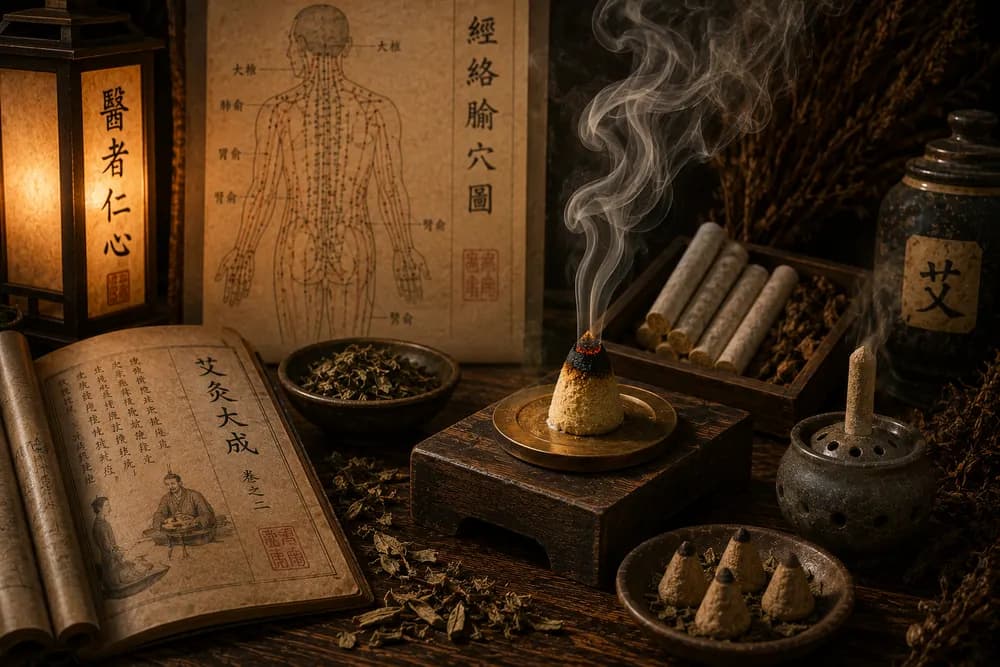
The warming art — how burning mugwort adds yang and moves cold, the methods of direct, indirect and warm-needle moxa, and where to use them safely.
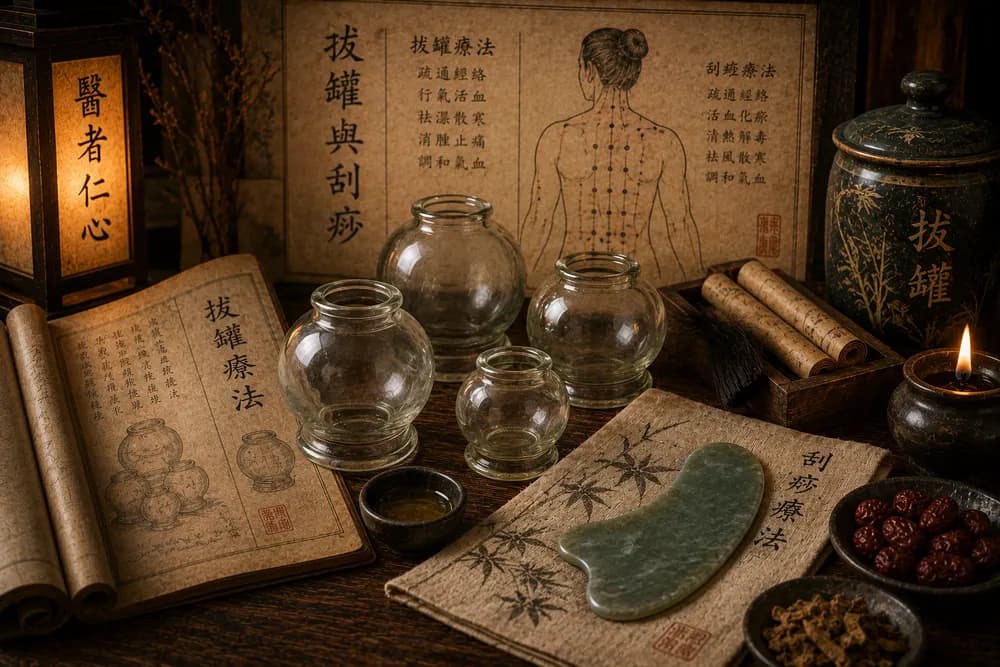
The two great surface therapies — negative-pressure cupping and pressure-stroke gua sha: how they move stagnation, when to use them, and how to read their marks.
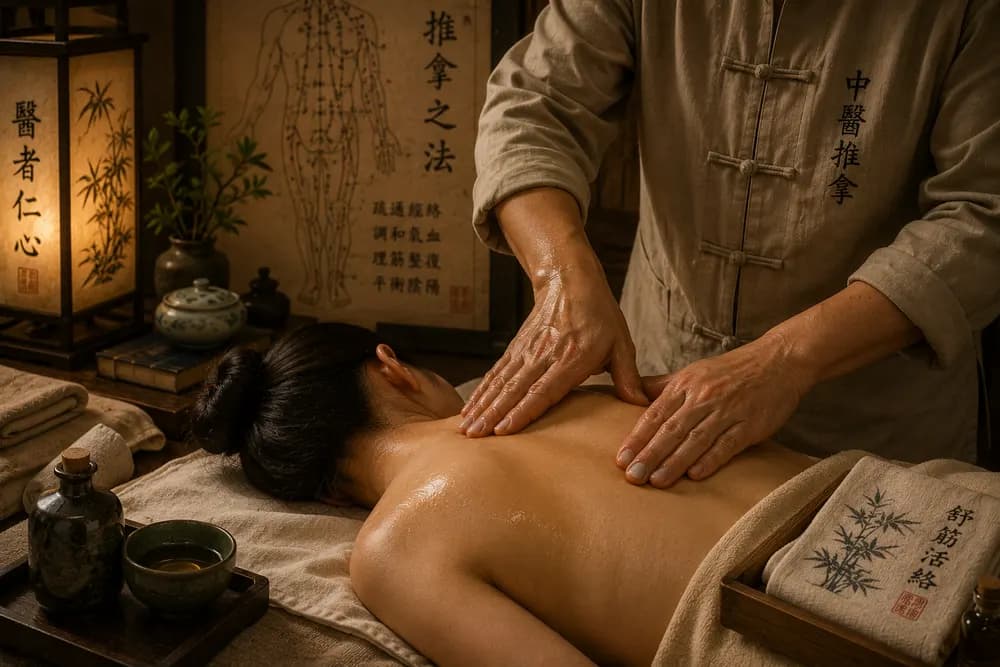
Healing through the hands alone — how tui na works on the channels, its core manipulations, joint methods, and clinical use for pain and beyond.
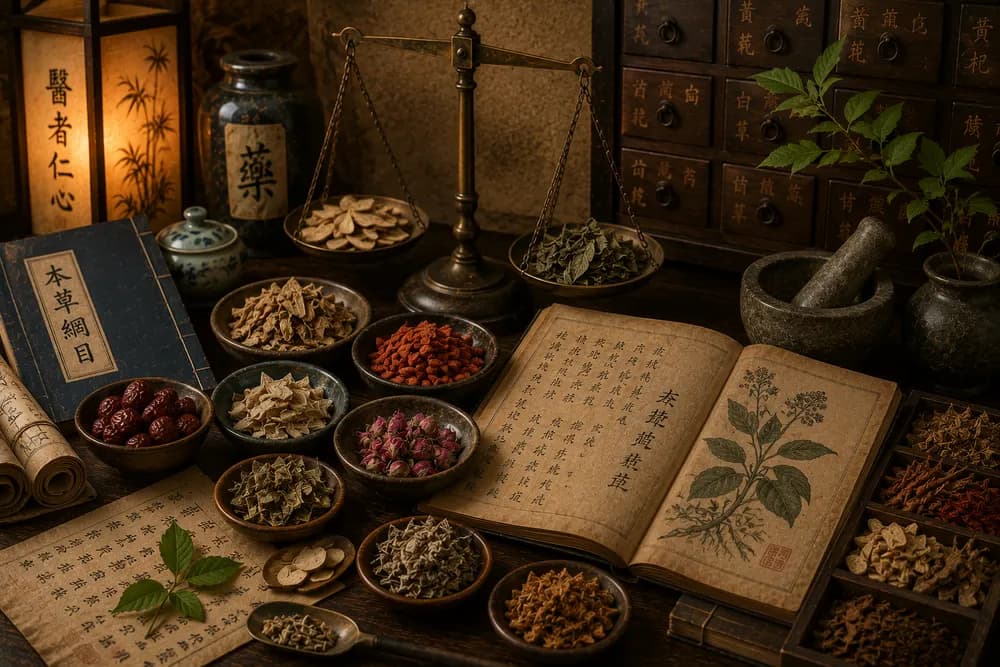
The Chinese pharmacy, category by category — how a herb is characterised, and the essential medicinals that release, clear, move, warm, tonify and stabilise.
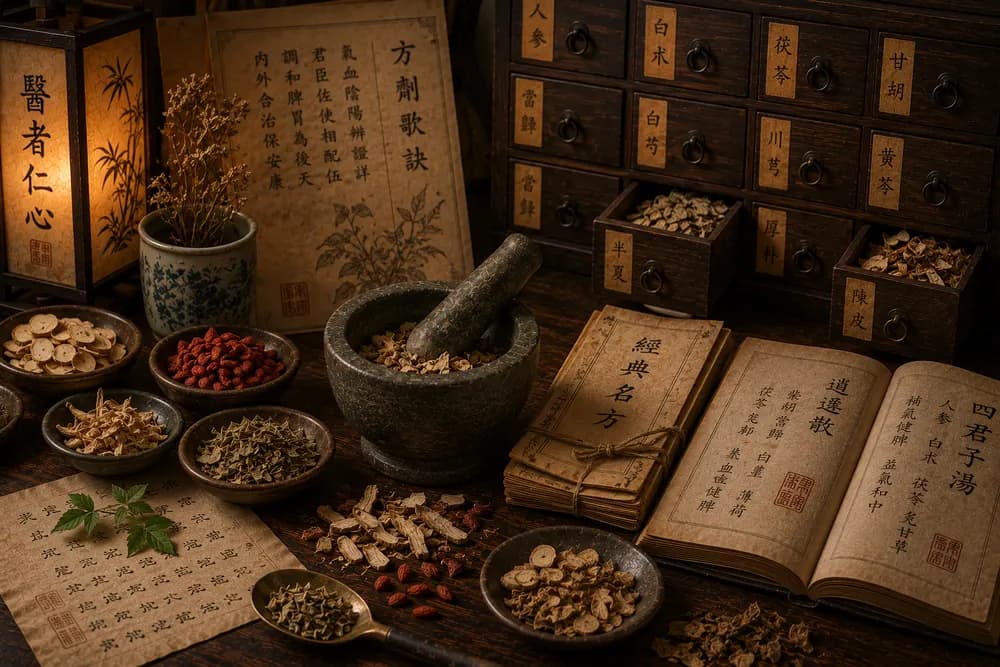
How herbs become medicine — the architecture of a formula and the classic named prescriptions that release, clear, harmonise, tonify, move and warm.
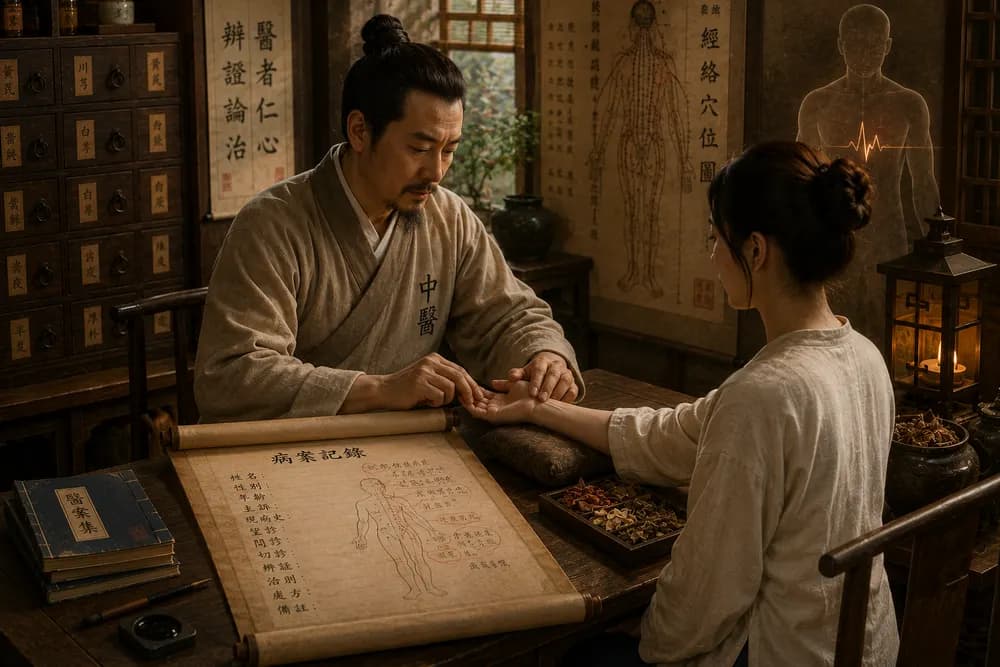
Where theory meets the patient — the clinical method and worked cases that move from the four examinations to a pattern, a principle, and a treatment with points and herbs.