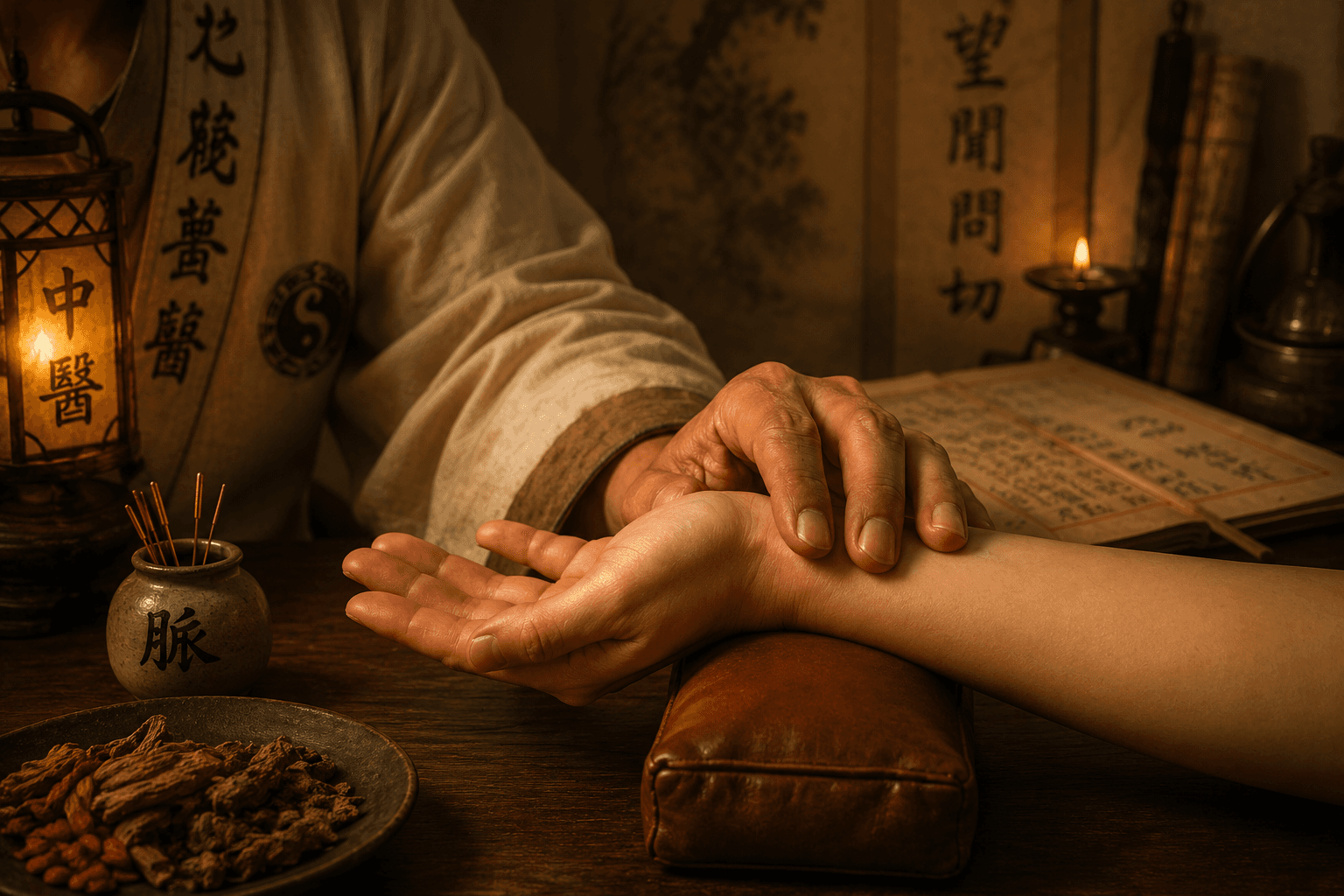
Pulse taking is a distinctive practice in Traditional Chinese Medicine. During your appointment, your practitioner may assess your pulse to measure its rhythm, rate, depth, and force. This traditional method offers valuable insights into your health by revealing connections to the body's twelve meridians, including yin, yang, and qi channels. For details on pulse locations, please refer to this article.
Pulse taking is a primary diagnostic tool in Chinese medicine. It enables practitioners to assess vital signs such as heart rate, blood pressure, and internal energy flow. Factors like work, exercise, emotional state, and lifestyle choices—including stress, irregular eating, and substance use—can influence your energy and overall balance. These changes are often reflected in your pulse.
What to Expect from Pulse Taking?
Practitioners carefully analyze your pulse at several locations. The wrist is most commonly used, but pulses may also be checked at the neck, top of the foot, and inside the ankle. When examining the wrist, one or both hands are assessed using three fingers placed just below the palm. Each finger corresponds to different organ systems: the finger nearest the palm relates to upper organs, the middle finger to middle organs, and the finger closest to the elbow to lower organs. This technique helps evaluate various bodily functions.
What does Pulse Taking Tell You?
Practitioners assess the speed, strength, quality, and smoothness of your pulse. Traditional Chinese Medicine recognizes 28 pulse qualities, each providing insights into health and wellbeing. Common findings include a fast pulse, which may indicate heat or inflammation; a slow pulse, suggesting cold or inefficiency; a weak pulse, pointing to deficiency; and a strong pulse, indicating excess. Pulse width is also evaluated: a thin or wiry pulse may signal fluid deficiency, often linked to fatigue, insomnia, or nutrient shortages, while a slippery pulse can suggest buildup or blockage, commonly associated with digestive or sinus issues.
During your TCM appointment, your practitioner evaluates your pulse to assess your internal rhythms and the interaction of your energy and bodily functions. A comprehensive diagnosis considers multiple factors for the most accurate understanding.
Your practitioner considers all aspects of your health to provide holistic support throughout your health journey.