Functions
warms the stomach, dissipates cold moves constrained qi, stops pain
Indications
Cold invading the Stomach with qi stagnation: sudden cramping epigastric pain that likes warmth and pressure, worse after cold food or drink vomiting of clear fluid no thirst pain relieved by warm drinks or warmth applied to the abdomen
Contraindications
stomach heat epigastric pain due to yin deficiency not suitable where heat signs are present
Notes
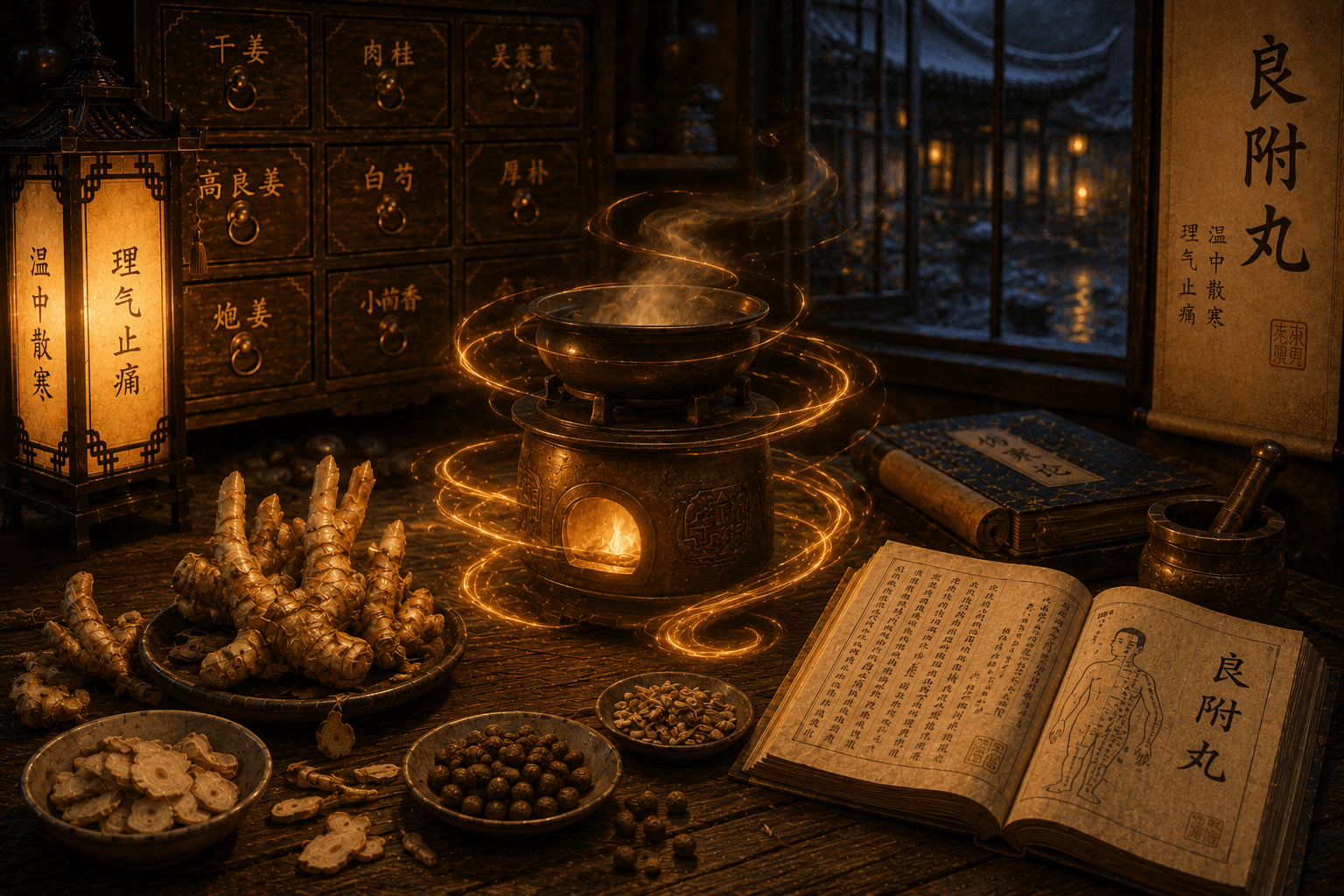
The essential two-herb formula for cold-type epigastric pain with qi stagnation. Gao-liang-jiang warms the Stomach and dissipates Cold; Xiang-fu moves constrained Qi and relieves pain. The two herbs work in tandem: the ratio is adjusted clinically — increase Gao-liang-jiang when Cold dominates, increase Xiang-fu when emotional constraint and Qi stagnation are the primary driver. It is not suitable for Stomach Heat or Yin-deficiency patterns. Preparation: Traditionally, Gao-liang-jiang is prepared with grain-based liquor and stone-baked, then ground to powder; Xiang-fu is washed in vinegar, stone-baked, and ground separately. Immediately before use, equal amounts of each powder are mixed with a spoonful of fresh ginger juice and a pinch of salt to form pills. Today the formula is commonly given as powder or pills (6 g per dose, one to two times daily with boiled water) or prepared as a decoction. Modifications: + Ban-xia and Bai-zhu → for prominent nausea and vomiting of clear watery fluid; + Fu-zi and Rou-gui → when cold extremities and deeper yang deficiency accompany the cold pain; + Shan-zha and Shen-qu → when food stagnation is concurrent
For education only — not medical advice. Consult a qualified practitioner.